Skip to content

Enterprise Account Executive, SalesforceSan Francisco, California

Daniel Timpane

Most of enterprise AI happens after the demo.

I work with large organizations on the part of technology that rarely makes the keynote: getting data, systems, and people to move together so new ideas actually reach production. Today that means MuleSoft, integration, and data foundations at Salesforce.

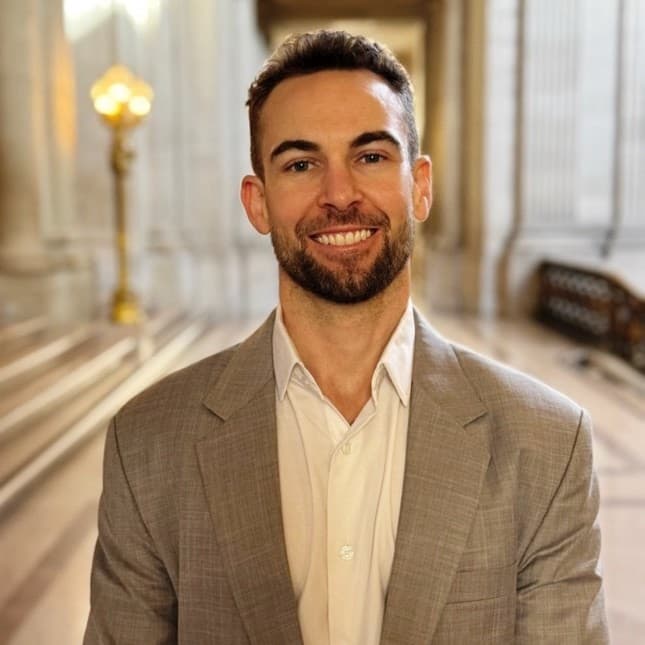
Portrait of Daniel Timpane
of quota and President's Club, FY22 at Yext
143%
North America Enterprise performer, two years running
Top 10
Selling enterprise software since — starting at Salesforce
2013
Promoted to Director, Enterprise Sales at Yext
AE → Dir.

Brands I've worked with

  • Walmart
  • Hard Rock International
  • Best Buy
  • Chewy
  • Restaurant Brands International
  • Bloomin' Brands
  • Menards
  • Follett
  • Orvis
  • Do it Best

Selected deal stories

How I approach hard, high-stakes problems.

Real deals, each told the same way: the challenge, the insight, the approach, the people, the outcome, and the lesson.

No. 1At MuleSoft · Walmart · Retail

Selling a pattern, not speed

An engineering lead saw no integration gap. I earned the right to expand by delivering what he asked for first.

The challenge
Negotiated discounts reached a new CRM hours late, so deals went live at the wrong rate and finance caught the errors at billing.
My contribution
Reframed a speed problem as an ownership problem, and earned the engineering lead's trust by delivering the demos he asked for, in his order.
The outcome
First use case bought. The larger pricing and billing opportunity is still open.

Business challenge

Walmart was moving one of its newer business units onto a new CRM. The move was done quickly, so old data habits came along. Records travelled through a central store on a schedule of hours. Most changes could wait. A negotiated discount could not. When it arrived late, deals went live at the wrong rate and finance found the error at billing. Staff retyped values by hand to get around it. More business units were about to join the same CRM, which meant the problem was about to be copied.

Strategic insight

Everyone called this a speed problem. It wasn't. Most of the business was happy to wait a day. One process cost real money when it ran late. The deeper issue was ownership. Every fix meant changing older systems, each on a different team's roadmap, and the proper fix was more than a year away. The customer could integrate just fine. It lacked a standard way to do it that didn't queue behind other teams. So I stopped selling real time. I sold a reusable, governed pattern, and kept real time for the one place it earned its keep.

My approach

The engineering lead told me plainly he saw no gap. I didn't argue. He asked for two working demos, so I led with those, in his order, built around the pain points the business had already named. The pricing delay came last, as a question: here is the same pattern applied to the problem your team raised. I asked him for the volume and cost figures so the numbers were his, not mine. I also didn't propose replacing anything. Their data store stays. We only touch flows where delay costs money.

Stakeholder alignment

The business sponsor had already bought the first use case, but followed the engineering lead's advice. That made him the person to win. I didn't go around him. I did his homework with him, so he could recommend with confidence. Internally, I kept the integration specialist, the solutions engineer and the delivery architect on one story. I was careful never to describe anything as decided before the customer decided it. Where a delivery team was an ally, I checked with them before anything that might read as new scope.

Business outcome

The first use case was bought and is moving through the customer's internal approvals. The engineering lead agreed to a working demo so his team would be ready when the business brought him the request, with a broader evaluation to follow. The larger opportunity, applying the same pattern to the pricing delay and to usage billing, is still open. I can't claim a result yet. What changed is the conversation: from 'we see no gap' to 'show us where this beats our current path.'

“The strongest argument only lands after trust.”

What I learned

I came close to leading with my strongest idea instead of the one I was asked for. The pricing delay was the best business case, and the engineering lead had never raised it. Showing it first would have told him I'd gone around him. The lesson is that earning the right to expand matters more than being right about where the value is. Deliver what they asked for. Then ask a question about the next thing. The strongest argument only lands after trust.

Permalink to this story

No. 2At Yext · Hard Rock International · Hospitality & entertainment

One problem, five brands

Every Hard Rock division wanted something different. I got the CIO to name the one problem that mattered, then built the case on their own numbers.

The challenge
A new multi-brand loyalty program flooded one shared support team with questions. Answers sat in disconnected systems, and IT had no capacity to help.
My contribution
Ran discovery with every division, got the CIO to name one shared priority, and built a conservative business case on the customer's own support data.
The outcome
A single-brand listings customer became a multi-brand AI search agreement: the company's top AI search deal of the fiscal year.

Business challenge

Hard Rock International was folding its brands into Unity, a single loyalty program. One shared support organization served all of them — dining, hotels and casinos, retail, loyalty, even careers. The launch flooded it with loyalty questions. IT had no bandwidth to help. Answers lived in SharePoint, two ticketing systems and loose Word documents, so agents swivelled between screens and customers gave up and called. Only one of the company's brands was a customer of ours, and only for listings.

Strategic insight

Every division had its own pain. Hotels wanted one thing, loyalty another, marketing a third. Pitching each one separately would have produced several small deals and no executive owner. But the same problem sat underneath all of them: loyalty-related support requests were eating IT and service capacity across every brand. If the CIO named that as the top priority, five conversations became one decision.

My approach

I ran discovery with each division lead, then played the combined picture back to the CMO and CIO. The CIO confirmed the number one priority: cut loyalty support requests and give IT and service teams their time back. I scoped the rollout in that order — loyalty first, then hotels and casinos, dining, retail and careers — and built on the service platform they already owned instead of replacing it. The business case used their own support volumes and costs, with every benchmark clearly labelled.

Stakeholder alignment

The buying group spanned the CIO, CMO, and leaders of digital experience, loyalty, media, content and IT programs. I sequenced it: an onsite business review to find the shared objective, an executive gathering to build relationships, a meeting between our Chief Digital Officer and their CIO, then a value review with the CIO and loyalty leadership. Along the way we worked through competing internal priorities, a bad experience with a previous vendor, budget and launch timing, and real questions about integration.

Business outcome

A single-brand listings customer became a multi-brand agreement covering AI search for customer support, listings, reviews, structured data and analytics, co-termed into the existing contract. It was the company's top AI search deal of the fiscal year. The business case was deliberately conservative — it only counted support that already happened online — and still showed the investment paying back several times over.

“I didn't sell five teams.”

What I learned

Expansion inside a multi-brand company isn't won division by division. It's won by finding the one problem the executive above all of them already feels — and letting them be the one to name it. I didn't sell five teams. I got the CIO to say what mattered most, then built the numbers with their data, so the decision was theirs before it was ever mine.

Permalink to this story

About

I'm drawn to the gap between strategy and execution.

I've spent more than a decade selling enterprise software. I started on the Dreamforce sales team at Salesforce in 2013, worked my way up to Account Executive, then spent time at Zendesk and five years at Yext selling AI-powered search — finishing as a Director of Enterprise Sales. In 2025 I came back to Salesforce, and today I'm an Enterprise Account Executive on the Data Foundation team, working with large retail, restaurant, and consumer brands.

The pattern I see most often is simple: companies rarely lack data or applications. What they lack is a reliable way for work to move across the systems they already own. Closing that gap is less about software features and more about understanding the business, the politics, and the operating reality underneath.

That's why I'm so focused on where AI goes next. A model that can't reach the order system, the supplier network, or the customer record is a demo, not a capability. The companies that win will be the ones willing to do the unglamorous work underneath — and the people who help them get there will need to speak both business and architecture.

I'm a deliberate student of how decisions get made — most recently through Harvard Business School Online's Negotiation Mastery and Power and Influence for Positive Impact. I studied international business and French, have lived and worked in Paris, and still try to leave every conversation a little smarter than I entered it.

Based in
San Francisco
Previously
New York City
Roots
United States & Ireland
Focus
Enterprise AI, data & integration
Languages
French, Spanish, basic Catalan
Studied
San Diego State · Paris · Barcelona

How I work

  • Start with the business problem

    Cost, speed, risk, customer experience. The technology conversation earns its place only after that one is clear.

  • Execution is the strategy

    Plans are cheap. The real work is making change hold across systems, teams, and incentives.

  • Earn the right to go deeper

    Trust comes before architecture reviews. Credibility is built in small, specific, useful steps.

Experience

Where I've done the work.

A career spent inside complex enterprise environments — where the best outcomes come from understanding the business first and the technology second.

  1. 2025 — Present

    Salesforce

    San Francisco

    • Enterprise Account Executive, Data FoundationMar 2026 — Present · San Francisco
    • Enterprise Account Executive, MuleSoftFeb 2025 — Mar 2026 · New York

    Large enterprise accounts across retail, restaurants, food service, and consumer brands. I help organizations standardize how work moves across systems, APIs, partners, and channels — and connect that foundation to Salesforce, Data Cloud, and Agentforce.

    • Started as East Enterprise AE for Data & Integration in the retail vertical, then moved to San Francisco to cover Data Foundation.
    • Reframe integration from a one-off project into a governed execution layer for the business.
    • Coordinate a multi-product team — Salesforce Core, MuleSoft, Informatica, Slack, and Data Cloud — around one customer strategy.
    • Work with CIOs, CTOs, CDOs, enterprise architects, and finance leaders to tie technical decisions to cost, speed, and risk.
  2. 2019 — 2025

    Yext

    New York

    • Director, Enterprise SalesFeb 2021 — Jan 2025
    • Enterprise Account ExecutiveSep 2019 — Feb 2021

    Five years selling AI-powered search to large enterprises — helping brands deliver the right answers across their websites and support channels.

    • Promoted from Enterprise Account Executive to Director, Enterprise Sales.
    • President's Club FY22 at 143% of quota.
    • Named a top 10 North America Enterprise Sales performer two years running.
  3. 2018 — 2019

    Zendesk

    New York

    Enterprise Account Executive

    Enterprise sales for Zendesk's customer service platform in the New York market — helping organizations modernize how they support customers and employees.

  4. 2013 — 2018

    Salesforce

    San Francisco Bay Area

    • Account ExecutiveAug 2016 — May 2018
    • Business Development RepresentativeJun 2015 — Jul 2016
    • Sales RepresentativeDec 2013 — May 2015
    • Dreamforce Sales RepJun 2013 — Nov 2013

    Where I learned the craft. I joined on the Dreamforce sales team and worked my way from outbound rep to Account Executive, helping Bay Area companies find, win, and keep more customers.

    • Top performer on the Dreamforce sales team; asked to take on a team leadership role.
    • Personally sourced $660K+ in closed ACV and $2.6M+ in Stage 2+ pipeline as a Sales Representative, on one of the company's largest revenue-generating teams.
    • As a BDR covering enterprise and named accounts (3,000+ employees), hit 132% of quota in FY16 and generated $4.5M in qualified pipeline.
    Quota attainment, FY16 (BDR)
    132%
    Qualified pipeline generated, FY16
    $4.5M
    Closed ACV personally sourced
    $660K+
  5. 2009 — 2012

    Earlier

    San Diego · Paris

    • Sales & Marketing — RemedyOne2012
    • Marketing & Social Media Intern — Karl Strauss Brewing2012
    • English Teacher — Epitech, Paris2011
    • Sales & Management Trainee — Enterprise Rent-A-Car2009 — 2010
    • Sports Club Supervisor — Associated Students, SDSU2007 — 2012

    The foundations: front-line sales, early web and search marketing, managing a team of peers, and teaching English and American culture to university students in Paris.

    • Part of an Enterprise Rent-A-Car sales team promoted from a small local branch to one with a fleet of 250+ vehicles.
    • Taught weekly English and American culture courses to French university students.
    • Supervised a staff of peers and ran weekly meetings for SDSU's intramural program.

Education & learning

  • San Diego State University

    • B.A., International Business & French
    • Alpha Kappa Psi professional business fraternity
  • Harvard Business School Online

    • Negotiation Mastery (2025)
    • Power and Influence for Positive Impact (2026)
  • Stanford Continuing Studies

    • Cloud Computing: Selling and Marketing SaaS to the Enterprise
  • Studied abroad

    • Université Paris VII — International Business, French Studies
    • Universitat de Barcelona — International Business, Marketing
  • Certifications & training

    • Google AI Essentials
    • BASHO · Sandler · John Barrows
    • SSI Open Water Diver

Ideas

What I'm thinking about.

Working notes on enterprise AI, data, go-to-market, and the people side of change. These are topics in progress — essays will be published here as they're finished.

  1. 01AI

    Enterprise AI is an execution problem

    The model is rarely the bottleneck. The systems it needs to act on usually are.

    Proposed topic

  2. 02Data

    Your data infrastructure is your AI strategy

    Quality, lineage, and access are not prerequisites to the strategy. They are the strategy.

    Proposed topic

  3. 03Go-to-market

    What great enterprise sellers understand about change

    Large deals are change-management projects that happen to end in a contract.

    Proposed topic

  4. 04Leadership

    Negotiation and influence in complex organizations

    Notes on power, interests, and getting to yes when nobody is fully in charge.

    Proposed topic

  5. 05Personal

    What endurance sport has taught me about business

    Pacing, patience, and the long middle miles.

    Proposed topic

Beyond work

The rest of the picture.

The things that keep me curious, patient, and honest — mostly outdoors, usually on foot, increasingly on two wheels.

Family. Husband and father. The most important role I have — kept mostly offline.

Also: Manchester United and Bay Area sports, scuba (SSI Open Water), and volunteering with Surf For Life.

Contact

Good things start with a conversation.

I'm always glad to talk with founders, operators, and leaders working on enterprise AI, data infrastructure, or a genuinely hard business problem. If something here resonated — or you see it differently — I'd like to hear from you.

Good topics: Enterprise AI in production · Data & integration strategy · Go-to-market for technical products · Endurance sport & training.